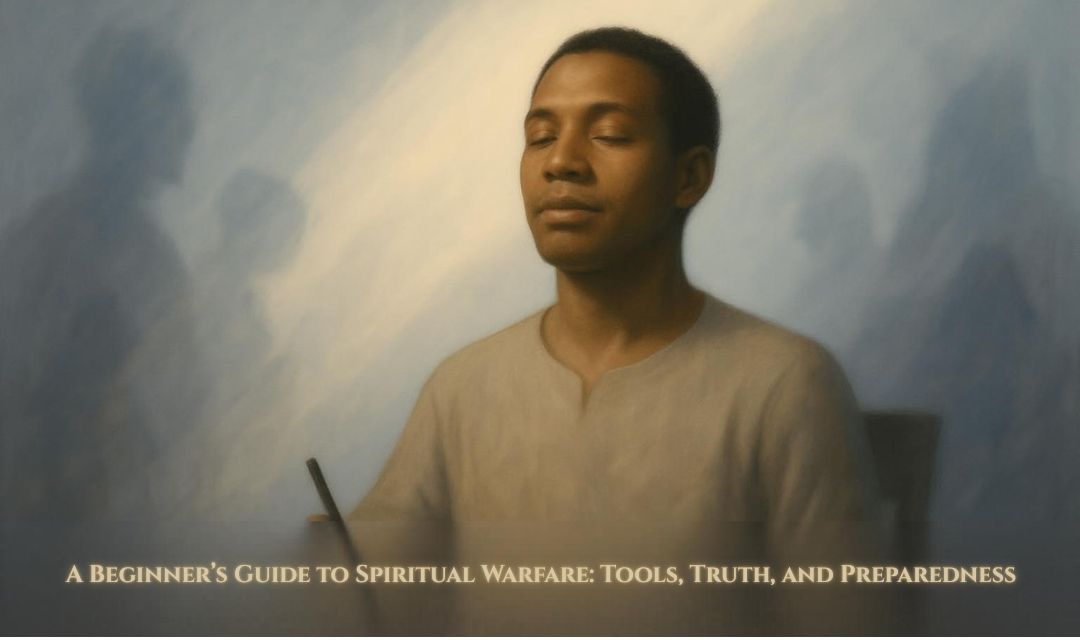
Spiritual Warfare can sound dramatic, strange, or far away from everyday life. Many imagine a cosmic battle happening somewhere out in the universe, fought by beings we can barely imagine. But for most people, the real struggle is much quieter and much closer. It lives in the mind, in the heart, and in the small, ordinary choices that shape who we become. Understanding the Basics of Spiritual Warfare starts with noticing the ways confusion, fear, and pressure try to reshape what we believe about ourselves and the world.
In many stories and faith traditions, this struggle is described as a clash between truth and illusion. That same idea appears in the book Sealed For The Lamb: The Last Resistance by Marty Gool. In that world, people were controlled not by chains, but by manipulated thoughts. Their enemy didn’t begin by using violence. It began by trying to close their eyes to truth. This makes a simple point for all beginners: Spiritual Warfare begins the moment something tries to dim your clarity or silence your inner freedom. It begins with manipulation and thrives when you give full control. It cannot thrive when you resist it. You don’t need advanced knowledge or special rituals to understand this. You only need awareness. This book is a Beginner Guide to Spiritual Warfare, as it helps us t realize how to win this war.
The Invisible Battlefield
For anyone feeling a similar situation, and you’re unclear of how to overcome this, think of this struggle as an invisible battlefield woven through daily life. The book showed this through a device that blocked people’s ability to see clearly. They walked, obeyed, and followed instructions because they believed those instructions were all there was. It’s a sharp metaphor for how Spiritual Warfare often works. The real battlefield is not outside of us. It is the inner space where beliefs form, where fear grows, and where identity takes root.
This Spiritual Warfare Truth Guide begins with recognizing the terrain. The mind is often the first target. Doubt, distortion, and distraction can creep in quietly, disguising themselves as everyday thoughts. The heart is next. Hopelessness, numbness, or emotional overload can disconnect us from what matters most. Then comes identity. When you forget who you are, or when you accept labels that don’t belong to you, the battle grows heavier.
For instance, in the book, the people who lived under the Dominion didn’t resist right away because they didn’t realize they were trapped. They thought the false world built around them was the only world that existed. That is why Spiritual Warfare for Beginners must start with one simple practice: noticing what tries to shrink your sense of truth. Awakening begins the moment you question a voice; internal or external—that feeds fear more than freedom.
Tools for the Journey
Once you understand that the battlefield is mostly internal, the next step is learning Spiritual Warfare Tools Explained in a clear and simple way. These tools are not dramatic or mystical. They are practical, grounding, and available to anyone.
The first tool is discernment, the ability to see clearly. As the story proceeds, the protagonist began to wake up when she paid attention to what didn’t feel right. She stopped letting manufactured thoughts wash over her. Discernment works the same way outside the story. When something feels manipulative, fear-driven, or hollow, it is worth examining. Ask where it came from and why it demands your attention.
The second tool is memory and truth. In the book, the Resistance guarded a repository of real history because truth had been erased from public life. In spiritual terms, truth is something you carry within yourself. It is the story of who you are and the values you refuse to abandon. Keeping a journal, talking honestly with trusted people, or simply reminding yourself of what you know to be right can strengthen your spiritual footing. When you remember what is real, false voices lose their power.
The third tool is community. No one in the story fought alone. People encouraged one another, shared knowledge, and stood firm together. Beginners in Spiritual Warfare can learn from that. A supportive community; friends, family, mentors, or even a group dedicated to growth keeps you grounded. The right people remind you of truth when you lose sight of it.
A fourth tool is stillness. In the book, victory didn’t come from noise or force. It came from quiet strength. Stillness helps you step outside of mental chaos. Simple practices like taking a few deep breaths, spending a moment in silence, or pausing before reacting can restore clarity. In Spiritual Warfare, stillness is not weakness. It is a shield.
The final tool is courage. The characters who resisted the Dominion stood their ground without hatred. Courage doesn’t always mean grand actions. It means choosing honesty, patience, and integrity even when pressure pushes in the opposite direction. Courage protects the soul from bending to fear.
Preparing Yourself
Preparedness in Spiritual Warfare doesn’t mean expecting danger around every corner. It means living with awareness. Marty Gool has demonstrated efficiently, through the people’s lens in the book. That the Dominion fell not through force, but through awakening. People began to remember what was true. They saw through illusions. They refused to participate in lies. That awakening is the heart of this Spiritual Warfare Truth Guide. For beginners, preparedness means practicing small daily habits that strengthen your inner world. Spend time in reflection. Notice when messages push fear instead of truth. Speak kindly to yourself. Question anything that tries to make you feel powerless. These small acts create a firm foundation that outer pressure cannot easily shake.
Spiritual Warfare isn’t about dramatic battles. It is about reclaiming the inner ground that belongs to you. When you choose clarity over confusion, courage over fear, and truth over pressure, you’ve already begun.